
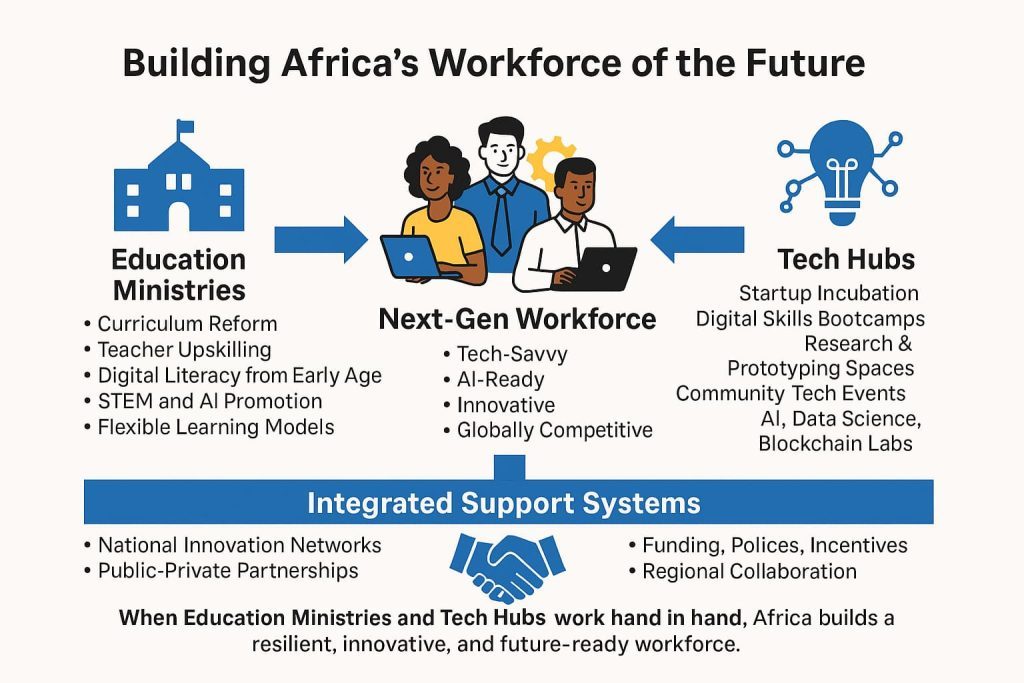
The future of Africa’s workforce is standing at a decisive point. Without technological and AI capacity, the continent risks widening its economic, innovation, and social gaps with the rest of the world. As the global economy rapidly evolves, Africa’s ability to compete, innovate, and thrive depends heavily on how it builds digital skills, automation, AI integration, and entrepreneurship today.
At Jongo Hub, we believe urgent action is needed to prepare Africa’s next-generation workforce — or the continent risks being left behind.
The Consequences of Inaction
If African nations fail to build technological and AI capacity, the workforce will be trapped in low-productivity, low-income sectors. Major risks include:
- Widening unemployment, especially among youth
- Brain drain, as talents migrate abroad to where their tech skills are nurtured
- Marginalization in the global economy
- Dependency on imported technology solutions
- Increased inequalities within societies
The future demands action. But what can Education Ministries, policymakers, and innovation leaders do to steer Africa toward a brighter, digitally-empowered future?
What Should Education Ministries and Academic Institutions Do?
1. Revamp Curricula:
Curriculum reform must integrate technology, AI, digital literacy, and critical thinking from primary to tertiary levels. Subjects like coding, robotics, data analysis, and AI ethics should become standard, promoting entrepreneurship and creativity over rote memorization.
2. Teacher Upskilling:
Massive national programs must retrain teachers in emerging technologies. Through partnerships with tech organizations like the African Union, nations can upscale training at low or no cost.
3. Flexible Learning Models:
Blended learning — combining classroom instruction with e-learning, virtual labs, and micro-credentials — will better prepare students for the digital economy.
4. Promote STEM and Innovation Ecosystems:
Special emphasis must be placed on promoting STEM among girls and marginalized groups. Innovation fairs, youth tech incubators, and direct school partnerships can spark early creativity.
5. Align Education with Industry:
Strong partnerships with private companies will ensure that educational content remains relevant to market demands. Internships, apprenticeships, and project-based learning must become central pillars of education.
How Can Private and Public Tech Hubs Help?
At Jongo Hub, we recognize tech hubs as strategic national assets that can fast-track Africa’s journey toward a future-ready economy.
1. Policy and Funding Support:
Governments must offer funding, tax incentives, and strategic partnerships to tech hubs. As the U.S. Embassy in Cameroon frequently highlights, supporting entrepreneurship and innovation ecosystems is key to national development.
2. Capacity Building Programs:
Tech hubs can offer certifications and bootcamps in AI, cloud computing, blockchain, data science, and cybersecurity — preparing youth for global competitiveness.
3. National Innovation Networks:
By connecting tech hubs into a national network, countries can foster best practices, share resources, and boost cross-border collaborations, as encouraged by initiatives from the United Nations.
4. Talent Pipeline Integration:
Students could work within tech hubs as part of their education journey — gaining real-world innovation exposure alongside academic instruction.
5. Focus on Local Solutions:
Tech hubs should be incentivized to develop AI and tech solutions targeting local challenges such as agriculture, healthcare, governance, and education.
6. National AI Strategies:
National AI strategies should embed tech hubs at the center, making them accelerators for AI-driven startups, community innovation, and global partnerships.
Final Reflection: Africa’s Urgent Call
Africa’s education ministries and tech ecosystems must radically reform learning systems and empower tech hubs if they wish to catch up with global trends. Without a dual, bold approach, Africa risks being digitally colonized once again — not by guns, but by code.
At Jongo Hub, we are committed to being at the forefront of this transformation, offering training, mentorship, incubation, and empowerment for Africa’s next generation of tech innovators.
Together, with the African Union, the U.S. Embassy in Cameroon, and global partners like the United Nations, we can build a resilient, innovative, and future-ready African workforce.